
Awnings and canopies
Commercial Awning Permits Long Island: Owner Guide
20 min read · Mineola Signs & Awnings
Navigating the red tape for a storefront awning can delay your grand opening by weeks. Every town from Nassau to Suffolk has its own rules for overhead structures....
Navigating the red tape for a storefront awning can delay your grand opening by weeks. Every town from Nassau to Suffolk has its own rules for overhead structures. Business owners must get the right paperwork to avoid costly fines.
Request a free commercial awning quote and get a detailed proposal within 24 hours.
Getting commercial awning permits Long Island is a required step for most business owners who want to install new storefront canopies. Local towns use these permits to ensure all overhead structures meet safety rules, such as those in the Town of Huntington. The application process usually means sending professional drawings and proof of insurance to your local building department. You must also prove that your awning does not block public paths or break local fire safety laws. Skipping this legal step can lead to big fines or orders to take down the structure. Working with an expert team helps you handle the paperwork and avoid errors that slow down the sign-off.
You should first determine if your specific project needs a formal application. To help you decide if commercial awning permit requirements apply to your Long Island project, we have outlined the most common rules. Understanding these local laws is the best way to start. The path begins with
Commercial Awning Permits Long Island: Do commercial awning permits on Long Island apply to your project?
Most Long Island commercial awning projects need local review because an awning changes the building exterior and may extend above a public path. Requirements vary by municipality, property, size, lighting, and signage. Confirm the current rules with the town or village before fabrication begins.
Most business owners on Long Island will need a permit to add a new awning to their shop or office. Local towns treat these add-ons as changes to a building's outside. Because rules vary by town, you must check with your local building office before you start any work. Getting the right forms helps you avoid fines or orders to take the awning down.
Local town rules for commercial awnings
Each town on Long Island has its own set of rules for custom commercial awnings. For instance, the Town of Huntington requires a permit for any repair or change to a commercial structure. This includes adding or fixing an awning. Other towns like Islip may let you file your forms online to save time. But even with fast filing, the rules for what you can build stay strict.
Town boards look at how an awning fits with the local area. They check the size, color, and how it joins the wall. If your business is in an old zone, you might face even more rules. In these cases, a planning board must review your design to make sure it matches the old style of the street. It is best to get expert awning permit guidance to handle these local codes.
When a permit is needed
You often need a permit if your awning is large or hangs over a public path. Many towns require a filing if the awning covers more than 50 square feet. If the fabric sticks out more than 40 inches from the building wall, local staff will likely want to see your plans. These rules help keep the public safe and keep the paths clear for people walking by. Project details that often trigger a review include:
- Awning size over 50 square feet.
- Extension of more than 40 inches from the wall.
- Use of lights or signage on the fabric.
Height is also a big factor for safety. Most towns require a gap of seven to eight feet between the bottom of the awning and the ground. This prevents people from hitting their heads as they walk under your sign. If you want to add lights or signs to the fabric, you may need a separate electric permit. Each detail changes what forms you need to fill out for the town.
How to prepare your filing
A strong permit filing needs clear proof of your plans. You will usually need a land survey that is less than one year old. This survey must be signed by a pro who has a New York license. You may also need to show three sets of building plans that follow state fire and safety codes. These plans show the town exactly how the awning will be built and held in place.
The land owner must sign the forms and have them notarized in most towns. Tenants usually cannot sign for these changes on their own. You might also need to provide a site plan that shows where the awning sits on the lot. If the project is very large, the town could even ask for parking data. Working with Mineola Signs & Awnings means having a partner to handle these forms so your project moves through the review phase much faster.
Why awning requirements vary across Long Island
Awning requirements vary because Long Island properties fall under different town, village, zoning, historic-district, and building-review authorities. The correct filing office depends on the property address. Confirming jurisdiction first prevents the wrong application, missing documents, and avoidable project delays.
Most towns in Long Island require a permit for any commercial awning installation to ensure safety and code compliance. While the basic need for a permit is common, the specific rules change as you move from one village to the next. Local boards set their own standards for how far an awning can stick out and what materials you can use. Failing to check these rules early can lead to costly delays or fines for your business.
Town and village code differences
Permit rules vary because each local government manages its own building zone laws. For example, a building permit in Huntington is needed for the repair or change of any commercial structure. Other towns might focus more on how an awning affects the look of a historic street. Some areas have strict rules for custom printed fabric and vinyl graphics, while others may only care about the height of the frame above the sidewalk.
Height clearance is a major factor that changes by location. Awnings that go over public paths often need a gap of at least seven to eight feet between the fabric and the ground. However, some areas like Queens mandate a minimum sidewalk clearance of 8 feet for all installations. Small differences like these mean a design that works in one town might be illegal just a few miles away.
Finding the right review authority
Business owners must find the correct local office to review their project before they start fabrication. In many places, you will need to file your permit application electronically through a town portal. Identifying if you are under the rule of a specific village or a larger town is the first step. This choice affects which forms you fill out and how much you will pay in fees.
The type of documents needed can also change based on the town. Many local offices want an accurate survey that is less than one year old and signed by a licensed professional. You may also need to show that your awning permit guidance matches the legal use of the space listed on your building's records. A mismatch between your plans and the official records can stop a project before it begins.
Local confirmation for project success
Confirming every detail locally is the only way to avoid legal issues. Small facts, like whether a signature must be notarized, can vary. In the Town of Huntington, the property owner must sign the form, and a lessee cannot sign in their place. These fine points of the law are why working with a local expert who knows the area is a smart move for any business.
Mineola Signs & Awnings has spent 100 years helping local shops navigate these complex rules. Our team handles permit expediting to take the stress off your plate. We perform technical surveys to make sure your project meets every local code from the start. This careful planning ensures that your new awning is both beautiful and fully legal under your town's unique laws.
What local officials may review before approving an awning
Local officials may review structural attachment, wind and load safety, sidewalk clearance, accessibility, zoning, lighting, signage, and the awning's fit with the building. A complete submission shows how the finished installation protects pedestrians and complies with the property's applicable rules.
When you apply for awning permit guidance, local towns look at many details. They want to know the new structure is safe for the public. Each town on Long Island has its own set of rules. Most reviews focus on how the awning fits the building and the street. You must show that your plan follows the law before you can start work.
Structural safety and load limits
Safety is the top goal for any building office. Town staff check your plans to see how the awning stays on the wall. They look at the frame, the fabric, and the bolts. They must be sure the awning can handle strong winds and heavy snow. In the Town of Huntington, you need a building permit for any change to a commercial structure.
Plans must show that the parts meet state fire codes. You may need to give the town three sets of clear drawings. These drawings should show the exact size of the frame and the type of metal used. Most towns also ask for a site map that is less than one year old. This helps them see where the building sits on the land.
Public clearance and ADA rules
Towns must keep the sidewalks safe for everyone who walks by. They check the height and width of your new awning. Most rules say the bottom of the awning must be at least eight feet above the ground. This keeps the path clear for tall people and helps avoid harm. If the awning goes over a public walkway, it must meet strict height rules.
Ease of access is another big part of the review. The town will look at commercial awning installation to ensure it meets ADA laws. This means the awning cannot block the way for people with body needs. It should not make the sidewalk too narrow for a wheelchair. Local boards often check these details before they say yes to your project.
Site design and zoning laws
The look of your shop matters to the local board. Staff may review the colors, logos, and lights on the awning. They want the design to match the zone and the other buildings nearby. Some areas have strict rules for old sites. In these spots, you might need to use fixed colors or parts that fit the old style of the street.
In many towns, you can now file your papers on the web. This makes the process faster for most business owners. You should always check the town site for the latest fees and forms. Small errors in the forms can lead to long delays. Working with a team that knows the local rules can save you a lot of time.
What drawings and project details should you prepare?
Prepare accurate field measurements, a current property survey when required, drawings that show dimensions and attachment details, material and color information, owner authorization, insurance documents, and any separate lighting or signage details. The local authority determines the final checklist.
Getting awning permit guidance for your shop on Long Island needs a lot of files. You must show the town how the build looks and stays safe. Making these files early helps you avoid long delays. Our team at Mineola Signs can help you get the right data for your commercial awning installation. We know the local rules for each town.
Accurate site surveys and measurements
Most towns need a fresh land survey. In towns like Islip, this survey must be less than one year old. A licensed surveyor must sign and seal the paper. This shows where your building sits on the lot. It also shows where the new awning will go. If your survey is too old, the town will likely reject your bid.
You may also need a site plan. This plan shows how the awning fits with other site features. Towns use this to check for clearance. For example, awnings over walkways must stay at least seven to eight feet high. This keeps the path safe for people on the street. It also helps you avoid fines for blocking the sidewalk. Clear numbers at the start save you from costly changes later.
Visual drawings and material samples
You must submit full plans of the work. These drawings show how your custom commercial awnings are built. In the Town of Huntington, you often need three sets of plans. These show that the work meets state fire and building codes. They must also show the mounting points on your wall. This ensures the frame can hold its own weight and the weight of snow.
Your plans should list the parts you will use. This includes the frame metal and the fabric type. You might need to show logos or graphics too. These details help the town see if the design fits local rules. Some projects may even need a pro engineer to seal the plans. This is often true for very large awnings or complex shapes. Using clear images helps town clerks approve your project faster.
Property owner forms and fees
The property owner must sign all permit forms. Most towns will not let a tenant sign for the work. You must also get these names notarized. This proves the owner knows about the change to their building. You will also need to pay the town fees when you file. Each town has its own fee list that can change at any time. It is best to check the latest rates before you go.
Keep a copy of your Certificate of Occupancy ready. Towns check this to see how you use the space. The new awning must not conflict with the legal use of the building. For example, it should not block exits or safety lights. Having these files ready keeps the process moving fast. If you are missing a file, the town may put your permit on hold for weeks.
| Document Type | Key Requirement | Why It Matters |
|---|---|---|
| Site Survey | Less than one year old | Shows exact property lines |
| Building Plans | Signed and sealed sets | Proves the build is safe |
| Owner Consent | Notarized signatures | Gives legal right to work |
| Letter of Intent | Written business plan | Explains the project goal |
| Site Plan | Shows site improvements | Checks sidewalk clearance |
Property considerations that can change the plan
Every building has its own set of rules that you must follow. Before you pick a color or a shape, you must look at your shop's layout and its legal state. Factors like your wall type, your lease terms, and your town laws will shape your project from the start. Getting awning permit guidance early helps you stay away from high costs or the need to fix a finished design. We look at every detail to make sure your plan fits both your brand and what your building needs. This prep work ensures that your project moves forward with no surprises.
Checking your wall and facade
The state of your building front is the first thing to check. Our team starts with a survey to see how we can safely mount your new frame to the wall. If your wall is old or made of thin material, it may need extra support behind the surface. These build needs can change the cost and the time it takes to finish the work. In some towns, a commercial awning on Long Island that sticks out more than 40 inches from the wall may lead to more rules. We check these local codes to make sure your setup is safe and legal for your shop.
Managing lease rules and owner consent
If you rent your shop space, you must talk to your landlord before you start. Your lease may have hard rules about the colors, sizes, or types of signs you can use. Beyond your lease, most towns want the owner's official word for any new build. For commercial awning permits Long Island towns often have very clear rules for who can sign the forms. In the Town of Huntington, the property owner must sign and seal the permit form. A person who rents the space is not allowed to sign these papers for the town. The owner must also show proof that they own the building, such as a deed or a tax bill.
Planning for sidewalk and design reviews
Where your shop sits on the street also changes your plan. If your building is in a historic zone, you may need to pass a board review. These boards look at your design to make sure it fits the look of the area. They may limit your font style or cloth choice to match the local history. You must also think about the people who walk on the path below. Most towns want a clear way for foot traffic so people can walk by with no trouble. This often means your awning must sit at least eight feet above the ground. By choosing custom commercial awnings, you can create a look that fits these rules and still looks great to your customers.
How to coordinate permitting, fabrication, and installation
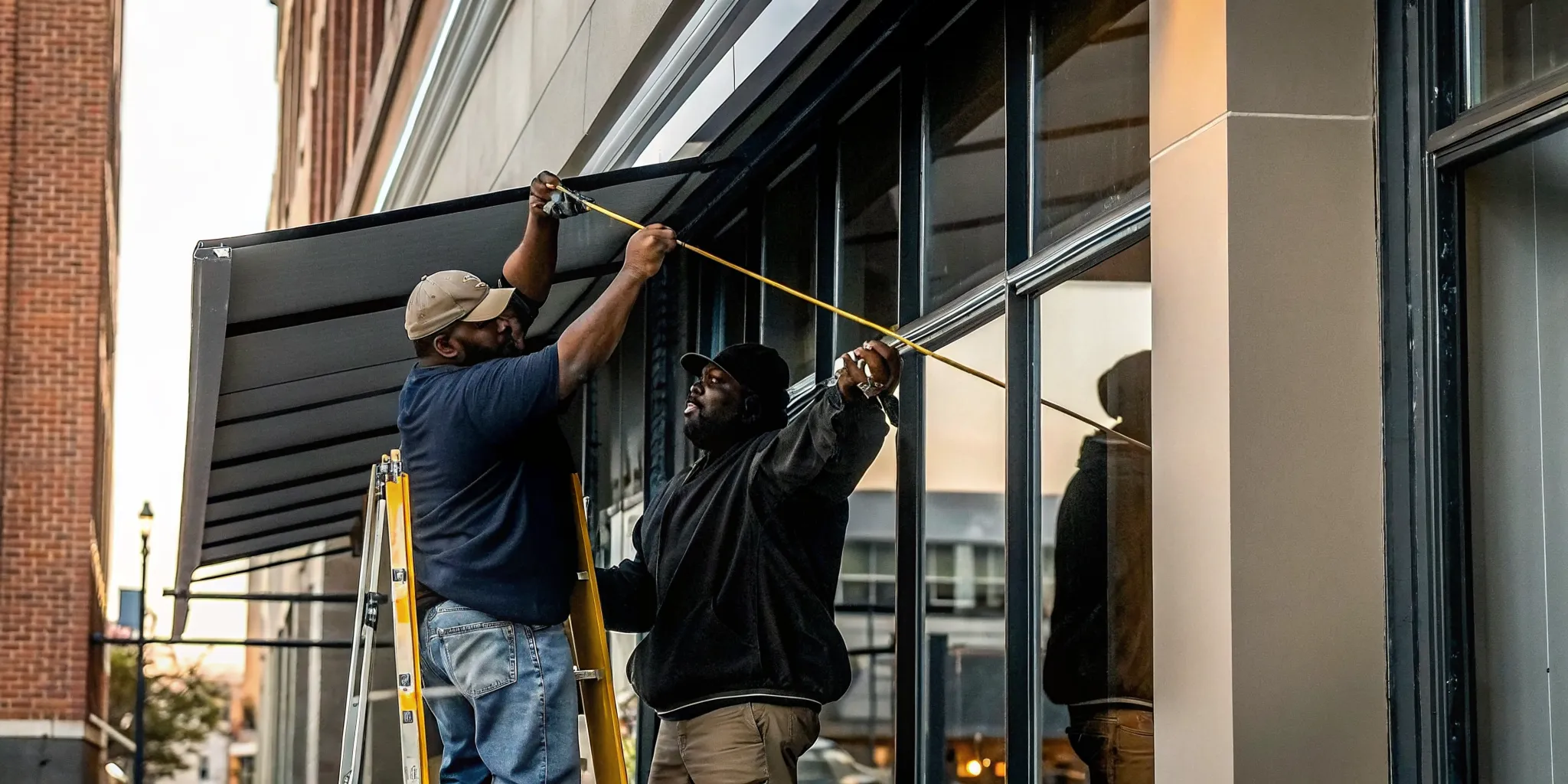
Coordinate the project in a fixed order: survey the site, confirm the reviewing authority, prepare drawings, submit the application, respond to comments, fabricate after approval, and schedule installation. One full-service team can keep measurements, documents, production, and field work aligned.
Managing a commercial project needs a set path. Moving too fast can lead to high costs or fines. Most towns on Long Island require a permit before you can mount a new frame on your building. We follow a clear plan from the first sketch to the final check to keep your work on track.
Initial survey and local rules
The first step is a technical survey. We visit your site to take exact measurements and check the building wall. We also look at local laws. Some towns have rules for how far a frame can hang over a path. We use this data to create awning permit guidance that fits your site and trade.
Plans and permit filing
Once we have a design, we build a set of plans. Towns like Huntington require detailed construction plans that show how the work meets state fire and building codes. These plans must also include a site map and proof that you own the land. Many offices now use digital files for the first check to speed up the process.
- Confirm local code: We check with your town or village to find the exact rules for your zone.
- Draft technical drawings: Our team makes scaled plans that show materials, frame build, and mounting points.
- Submit the application: We file the forms, plans, and fees with the local building office for review.
- Fabricate the awning: After the town gives the green light, we start the build in our shop.
- Prepare the site: We check the wall again and set up any tools or trucks needed for the day.
- Install and inspect: Our crew mounts the custom commercial awnings and schedules any required town checks.
Fabrication and field execution
We do not start the build until we have the permit. A town may ask for a change in size or color during the review. Building after approval saves you from having a finished item that you cannot legally hang. Once ready, we use our own fleet of trucks to bring the work to your site. This lets us control the timing and ensures a safe, fast install for your shop.
How a full-service awning provider reduces friction
Managing a new awning project can feel like a full-time job. Business owners often find themselves caught between a designer, a builder, and a town clerk. A full-service shop takes those tasks off your plate. They handle everything from the first talk to the final bolt. This "turnkey" way of working saves time and stops mistakes before they start. When one team owns the whole path, you get a smoother ride and a better result for your shop.
Expert surveys and clear planning
The first step in any project is a technical survey. This is not just a quick look at your storefront. A team like Mineola Signs does a full check of your site. They read building plans to see how a new structure fits. This step is vital for getting custom commercial awnings that truly fit your wall. It also helps find issues with height or reach that could cause legal trouble later.
Planning for commercial awning permits Long Island requires a lot of data. Some towns, like Islip, need a property survey that is less than one year old. This paper must be signed and sealed by a licensed pro. Having an expert team handle these details means you do not have to hunt for old papers or hire extra help. They know what the town wants to see and prepare it for you.
Helping with permit expediting
Town rules on Long Island can be very thick. Nearly every town needs a permit for a new business awning. The paperwork is often a headache. For example, the Town of Huntington requires detailed construction plans that show how the work meets state fire and building codes. If you miss one form, your project could stop for weeks.
A full-service shop gives permit expediting. This is an expert service that helps you move through the system. Working with a pro helps with these common needs:
- Checking local code and ADA rules.
- Writing a letter of intent for the town.
- Submitting site plans and surveys.
- Talking to town clerks about your project.
This help reduces the risk of being turned down due to small errors. It lets you focus on your business while they talk to the town for you.
Controlled installation and support
The last friction point is the physical install. Many shops hire outside crews for this part. That can lead to long wait times or poor work. A shop that owns its own gear, like bucket and 100-foot crane trucks, has full control over the schedule. They can plan the work when it is best for you. They don't have to wait for a rental truck to show up.
Choosing a shop with a 100-year history means you have support after the job is done. They handle commercial awning installation and can return for repairs or upkeep. You don't have to look for a new person if a storm damages your fabric. One phone call to the same team you started with gets the job done. If you have questions about a new project, you can contact us for a free quote.
Talk with Mineola Signs & Awnings before you file to coordinate drawings, fabrication, and installation, with a free proposal within 24 hours.
Frequently Asked Questions
Do I need a permit for a commercial awning on Long Island?
Nearly every town on Long Island needs a permit for a commercial awning. Local laws ensure that your new structure is safe for the public. These rules apply to new installs and major repairs. If you put up an awning without a permit, you might face heavy fines. You could even be forced to take it down. According to the Vallesigns, most towns in Long Island and NYC need a permit for these projects.
What is the process for getting a commercial awning permit?
The process starts with a plan and a survey of your site. You must fill out a form and send it to your local building office. Some towns, like Islip, allow you to file these forms online. You may need a survey that is less than one year old. A licensed pro must sign and seal this paper. Often, the property owner must also sign the forms before a notary before the town reviews the work.
Do permit rules for awnings change by town?
Yes, permit rules vary quite a bit across Long Island. Each town has its own set of codes and fees. Some towns have strict rules on how far an awning can stick out from a wall. Others focus more on the height of the sign above the sidewalk. In Huntington, the owner must give proof of ownership with the permit form. It is best to check the local town site for the most recent forms and fees before you start.
Are there specific height rules for commercial awnings?
Most towns need a minimum height for any awning that hangs over a sidewalk. This rule keeps the path clear for people to pass safely. The standard gap is usually between seven and eight feet high. For example, some areas need at least an eight foot gap between the ground and the cloth. According to TV Metals, checking with local offices is key if your awning is very large.
Ready to start your Long Island awning project?
A custom awning is a great way to change how people see your business on Long Island. If you wait to file for your town permits, you may face long wait times that stop you from opening your doors on time. These delays can keep you from showing off your brand to new buyers or lead to fines that hurt your bottom line. You need a team that knows the local codes and has the right tools for a safe job. Our crew makes custom commercial awnings across Nassau and Suffolk and we know how to get the job done. We handle the hard work of permit planning so you can focus on running your shop. Starting your planning today makes sure your project stays on track and meets every legal rule. You will avoid the stress of last-minute filing and get a sign that lasts for many years.
Ready to get started? Request a free quote online and receive a proposal within 24 hours.
Free estimate
Want a price for your building?
Your name, phone, email and a line about the project. We come back within one business day.